Green Aventurine grounds while it opens—settling you deeper into your body rather than lifting you out of it. Rose quartz offers receptive softening; Green Aventurine rebuilds the internal steadiness that makes opening feel safe. Practitioners reach for rose quartz for grief that needs tenderness, Green Aventurine for hearts that have learned to brace against disappointment and need permission to trust again without forcing vulnerability.
Green Aventurine's combination of calm focus and gentle confidence makes it particularly effective for high-stakes situations. The C note at 524 Hz grounds scattered energy through the torso while the element supports the quiet belief that you're capable—without the pressure of forced positivity. Students use it before exams, athletes before competition, anyone preparing to perform when past setbacks have created anticipatory dread.
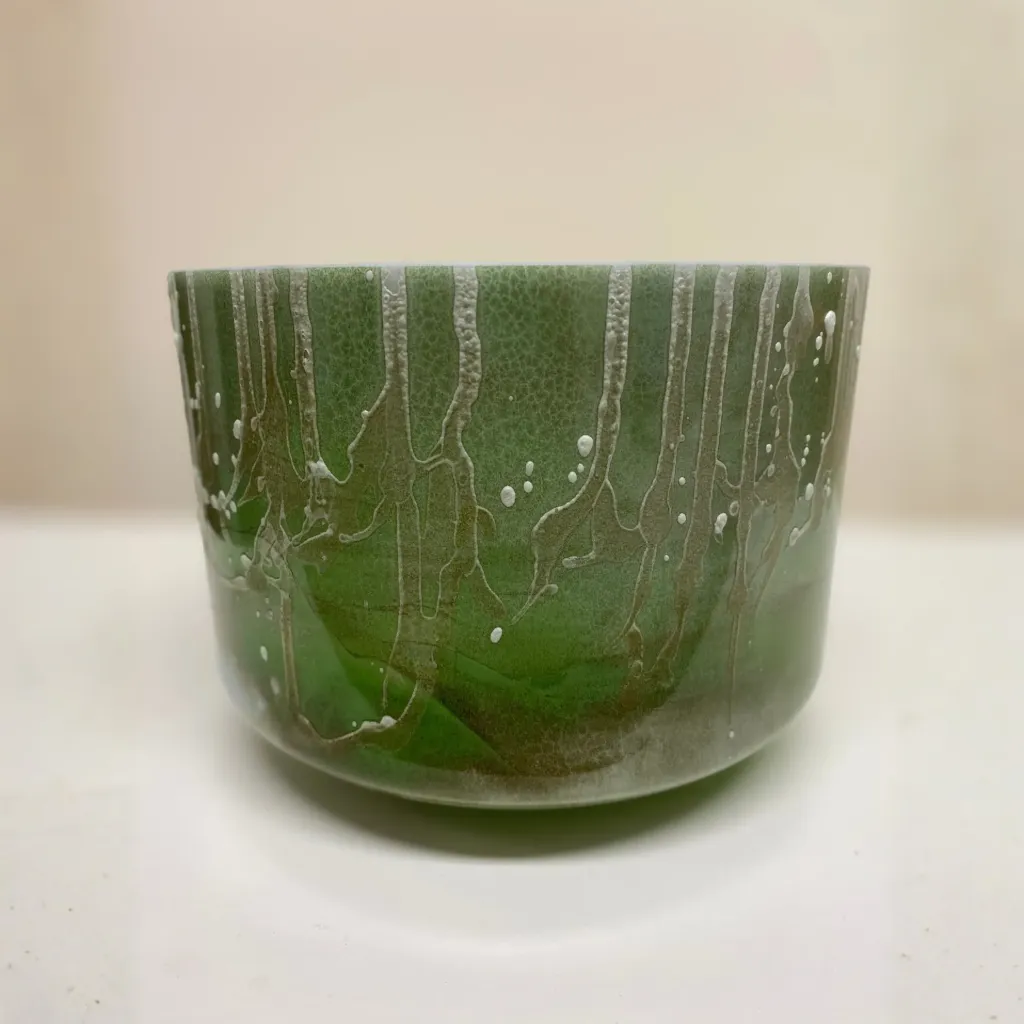
The fuchsite mica inclusions infused throughout the quartz create a unique microstructure that produces what people describe as a more enveloping, textured tone—like moss on river stones translated into sound. Unlike the bright, crystalline clarity of clear quartz, Green Aventurine's resonance feels organic and warm. This softer timbre serves practitioners working with clients whose nervous systems need gentleness rather than intensity during emotional release.
At 524 Hz, this bowl sits just 4 Hz below the 528 Hz Solfeggio "Love Frequency"—close enough to share some of that heart-opening, transformation-associated quality while maintaining its grounded C foundation. It won't match perfectly if you're building a strict Solfeggio set, but it offers a practical middle ground: the anchoring stability of C (home base, root connection) with the heart-supportive resonance of the 528 Hz range. Many practitioners prefer this hybrid quality for daily use.
Green Aventurine bowls are waterproof, temperature-stable, and sunlight-safe—the fuchsite mica is integrated at the molecular level during formation, not applied as a coating. The Mohs 7 hardness that made this stone useful for ancient tools translates to exceptional durability in bowl form. Clean with water and mild soap, store on the included silicone O-ring for stable playing, and handle with normal care. The infusion is permanent and won't fade, chip, or degrade over decades of use.
Yes—at 524 Hz (C+5 in A=440 reference), this bowl falls within concert pitch range and will sound in tune when played alongside guitars, keyboards, pianos, or any instrument using A=440 standard tuning. The C note provides a foundational anchor that blends seamlessly with other musicians or recorded music. If you're a sound healer who incorporates instruments, a music teacher using bowls in classroom settings, or anyone building a collection to play together, this compatibility makes integration effortless.