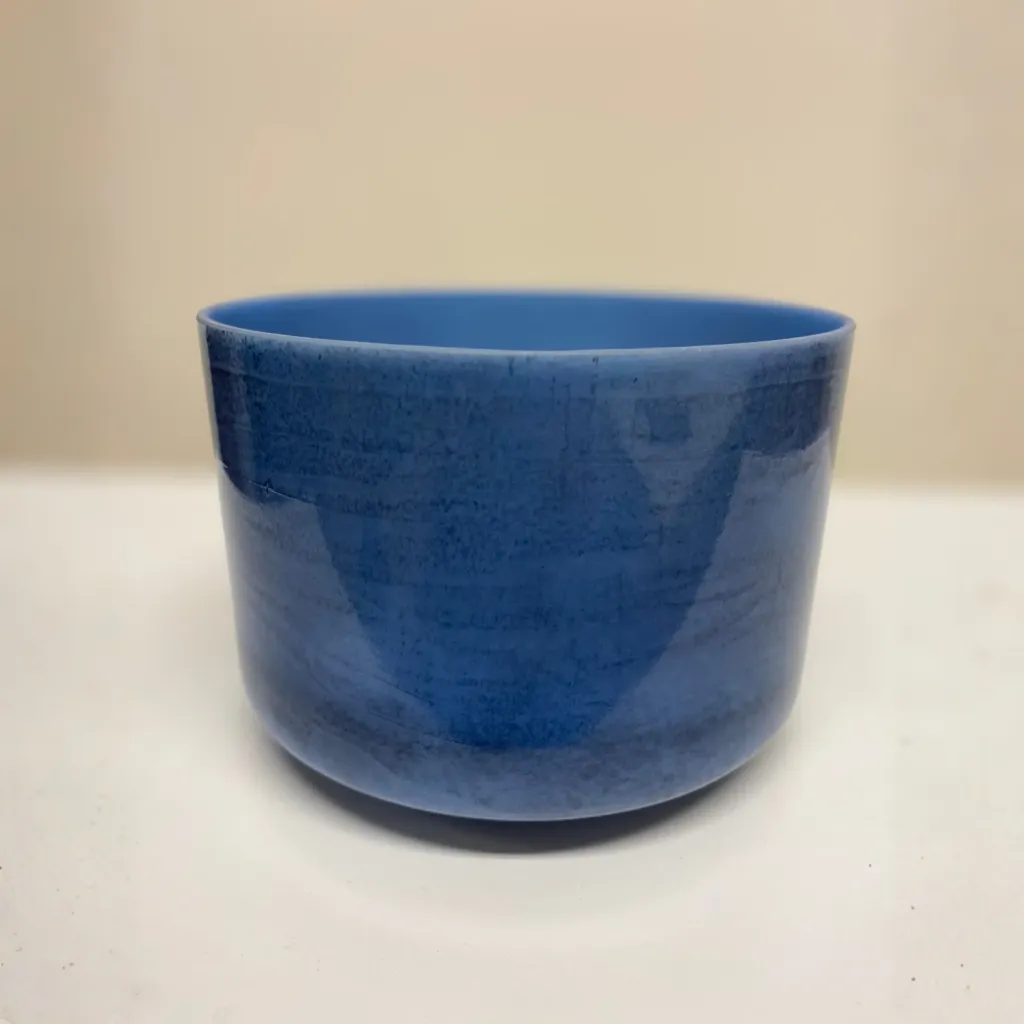
Lucidity Tea combines eleven herbs—Mugwort, Blue Lotus, Chamomile, Lavender, Passionflower, Lemon Balm, Hops, Catnip, Vervain, and Angelica Root—creating synergistic effects no single plant offers alone. While individual herbs target specific aspects of dream work, this blend addresses the full spectrum: nervous system calming (Chamomile, Hops), dream recall enhancement (Mugwort), consciousness expansion (Blue Lotus), and grounding (Angelica Root). The result is relaxation with awareness rather than sedation—you rest deeply while remaining receptive to subconscious insight. For practitioners, this means one bowl serves multiple intentions instead of requiring separate instruments for calming versus visionary work.
Yes—this blend specifically addresses the "mind won't stop" pattern that prevents sleep. The combination of Lemon Balm (reduces mental chatter), Passionflower (eases anxiety loops), and Hops (promotes drowsiness) works with the bowl's 374 Hz frequency to slow thought patterns without forcing unconsciousness. Parents use it during bedtime routines for overstimulated children; adults play it 20-30 minutes before sleep while journaling or lying down. The higher heart resonance (F#) creates a felt sense of the sound settling into your chest and core, which many describe as "breathing slowing without trying." This isn't a sleep aid that knocks you out—it's a nervous system reset that remembers rest for you.
Writers and artists seeking subconscious creativity access, therapists closing integration sessions, educators calming overstimulated classrooms, and anyone navigating grief, transition, or chronic stress. The blend's dream-enhancing properties translate to waking insight work—the same liminal space between conscious and subconscious that produces vivid dreams also surfaces creative breakthroughs and emotional clarity during meditation. Business professionals use it before visualization exercises; parents play it during homework time to help children focus without stimulants. The bowl serves anyone needing to soften their grip on linear thinking and access intuitive knowing, whether that happens during sleep or while awake.
The herbs themselves transform at high temperatures, but their structural imprint remains integrated at the molecular level within the quartz. Think of it like a fossil—the original organism is gone, but its shape is preserved in stone. During Divine Bowls' proprietary infusion process (refined over 40+ years), the botanical materials create a unique microstructure within the quartz crystal as it forms. That microstructure—not the herbs themselves—is what vibrates when the bowl is played, producing resonance patterns specific to this eleven-herb combination. This molecular integration is permanent and differs fundamentally from surface coatings or post-formation treatments that other manufacturers use.
Yes—this bowl resonates at 374 Hz, which aligns with the C=528 tuning system (known as the "Love Frequency" in Solfeggio tradition). If you play instruments tuned so that middle C equals 528 Hz, this bowl will harmonize beautifully with them. The C=528 standard creates a brighter, more elevated pitch than A=440 concert tuning, which pairs interestingly with Lucidity Tea's dream-work properties: you get relaxation with clarity rather than heaviness, rest that illuminates rather than sedates. For practitioners building collections, this compatibility means the bowl integrates seamlessly into heart-opening sessions or emotional release work where C=528 instruments are already in use.
Every Lucidity Tea bowl includes a pure quartz mallet wrapped in premium silicone for optimal resonance, plus a silicone O-ring for stable playing on hard surfaces. The O-ring allows the bowl to resonate freely without dampening—essential for the medium-long sustain this 8-inch size produces. Each bowl is formed in a single seamless vessel from 99.998% pure quartz with no welds or weak points, built to last lifetimes of use. The bowl ships directly from Divine Bowls' Ohio facility with the infusion permanently integrated during formation—not as a surface coating, but as part of the quartz's molecular structure.